
Why we’ll soon say goodbye to the good old keyboard

Bygone era

Remember those venerable contraptions with a characteristic 'clacking' sound? Yes, we are talking about our antediluvian typewriters and how they started out the QWERTY key set up revolution. Since its introduction in 1878, this practical set up has certainly survived up to our modernistic keyboard systems. Obviously, on the other hand, keyboards have also evolved considerably in the last 40 years, with great emphasis being given to improved user interaction. Thus we see the inclusion of 104 keys along with some special buttons for shortcuts, multimedia keys or even gaming keys, in the current set ups.

Traditional Computer Keyboards

Transforming age:

But with the progression of rampant technology in this field, we surely are witnessing a shift in paradigm. Most of these innovations are related to the modification of the traditional keyboard, as opposed to complete overhaul of the input device. Ultimately, the aim of the developers has always targeted the enhancement of simplistic and accessible nature of our ever trusty keyboards. So, without further ado, let us check out some of the credible yet advanced input conceptions available in the current market.

1. Virtual Keyboard

This conception entails a software component, which in turns allows us users to input characters into the computer device. In simpler terms, the virtual keyboard provides us with a virtual interface (of key layout) ingrained in the device screen, while the software is accessible through various components like touchscreen (as in iPad), mouse or even an actual keyboard. There are various advantages of this virtual set up. Firstly, it accentuates upon portability in devices like tablets, with the keyboard being literally embedded on the display. Moreover, the system also strengthens up security features like user preferred locking. Lastly on a conscientious scale, it can also pose as an alternative input mechanism for users with disabilities (who cannot access a conventional keyboard).

2. Virtual Laser Keyboard

It can be labeled as the evolved version of our aforementioned Virtual Keyboard. In this case, the system encompasses the laser projection of a full-size keyboard onto any flat surface. This obviously solves the problems of portability and ergonomic design (screen based virtual keyboards tend to be on the smaller size). Furthermore, there are some systems that even replicate the actual 'clicking' sound with their gesture recognition software.

3. Voice-to-text technology

As the name suggests, voice-to-text technology recognizes our voice oriented command, and then processes the 'speech' to convert it into a textual form shown in the screen. So, practically the system helps in inputting characters (and commands) without requiring to physically moving our limbs. The process in itself is quite accepted among modern consumers, as proven by the commercial success of Siri software (infused in iOS 5).

4. Motion-Sensing technology

The motion sensors we are accustomed to, are generally related to residential and office security systems, where such devices are used to detect everything from trespassers to smoke. Well, technologists have adapted the basic format of this very technology to contrive unique input devices in the computer realm. Embedded with electronic sensors that quantify motion, it was the Nintendo Wii Remote that started out the 'motion sensing' revolution in context of games. Later on it carried through Kinect (which instead utilizes infrared structured light) to complexly collective systems like Oblong's Mezzanine.

In the making:

Well, beyond the scope of currently market available systems, there has been a spurt of adroit conceptions (still in development stage) that provide us with a fascinating glimpse into the future. So, without delay, let us take a brief tour of them.

1. Eye-Controlled technology

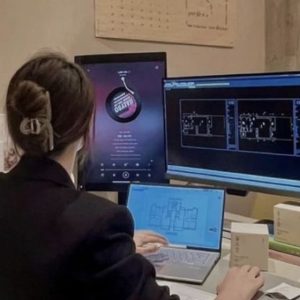
Imagine a screen, where you can control your icons by just the simple gazing power of your eyes. Sounds ludicrous? Well, electronic companies Tobii and Lenovo had showcased their collaborative project which does exactly that. In fact, the project entails a prototype laptop that responds to eye movements, in analogy to normal clicks from mouse. Like, eyeing a specific icon will result in giving out more info related to the app (like maps and photos). Tobii has even created a demo game, where you can obliterate virtual asteroids coming your way in the screen.

2. Thought Controlled Computing

Alluding to a brain-computer interface (BCI), this technology provides a direct communication pathway between the brain and an external device. In relation to this, researchers have come across some nigh brilliant solutions that entail only brain power for computer interaction. For example, scientists at the Washington University School of Medicine in St. Louis have contrived a device which has to be surgically implanted into the user, while he/she can control a computer cursor by just saying or thinking of a particular sound. In another instance, students from Ben-Gurion University have ingeniously designed a new graphical user interface (GUI), which allows disabled people to use their thoughts for various computer interactions like sending emails, surfing the internet and even accessing multimedia files.

Change Inevitable?

In answer to this question, we should look at the boisterous progression of the computer realm. Of course, there is no question about keyboards being our primary component of input, in the current scenario. But if the contemporary trends (like Kinect, Siri and iPads) are anything to go by, we are certainly looking forward to more simplistic yet interactive systems, which improve upon total user convenience. So, at the end of the day, most of us consumers would look for a change, not for its novelty, but rather for its practicality.

You might also like
© 2012, Instamedia. Some rights reserved. Powered by Instapress and Instacheckin.